ACM RVCE Blogs

Image for The Genome the Model Wrote: Inside the First AI-Designed Virus

The Genome the Model Wrote: Inside the First AI-Designed Virus

This post explores the biosecurity and technical implications of the first AI-designed synthetic viruses created by researchers at Stanford, who used genomic language models (Evo1 and Evo2) to generate novel bacteriophages capable of targeting antibiotic-resistant E. coli. While the researchers implemented strict safety measures by excluding human, animal, and plant pathogen data from the training models, the breakthrough underscores a growing gap between generative AI capabilities and existing biosecurity governance. Expert perspectives highlighted in the piece emphasize that while designing full functional viral genomes demonstrates a major technological shift, real-world risks may depend more heavily on DNA synthesis screening and ordinary lab biosafety controls rather than the AI models themselves.

by Krrish AgarwalRead post
Image for The Underdog Qubit: How Spin Quietly Caught Up

The Underdog Qubit: How Spin Quietly Caught Up

This post examines the recent rapid advancements in spin-qubit quantum computing, highlighting how multiple research groups (including HRL Laboratories, QuTech, Groove Quantum, and RIKEN) dramatically reduced single-qubit error rates from around 4% to as low as 0.02%. By leveraging semiconductor fabrication methods similar to ordinary computer chip manufacturing, spin qubits offer strong potential for commercial scalability, even though their qubit counts currently lag behind superconducting and neutral-atom architectures. The article concludes by noting IBM's strategic acquisition of HRL Laboratories as a major indicator that industry leaders are actively hedging on spin qubits as a viable, long-term quantum computing pathway.

by Krrish AgarwalRead post
Image for Attacking Yourself First: Inside Nosy Neighbor

Attacking Yourself First: Inside Nosy Neighbor

This post explores "NosyNeighbor," a timing-based side-channel attack developed by cybersecurity researchers to expose hidden vulnerabilities in safety-critical cyber-physical systems like avionics, pacemakers, and automotive braking networks. By observing execution timing across isolated software partitions rather than breaching code or networks, the attack achieves roughly 73% precision in identifying target tasks—demonstrating how modular, multi-vendor isolation can still leak sensitive operational timing. The piece highlights that while NosyNeighbor functions as a proof-of-concept red-teaming tool rather than a fix, it underscores a major risk where adversaries could leverage precise execution timing to disrupt critical real-time operations like anti-lock braking.

by Krrish AgarwalRead post
Image for Who's Doing What to Whom: Teaching AI to Draw a Crowd

Who's Doing What to Whom: Teaching AI to Draw a Crowd

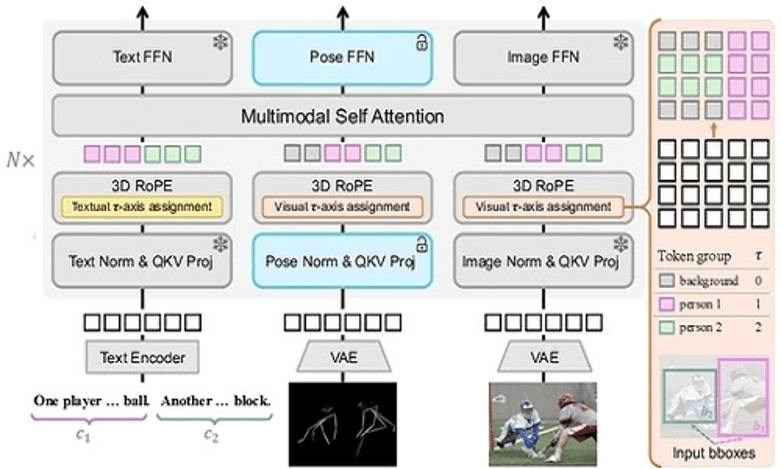
This post details a new iterative image-generation framework developed by Cornell researchers that overcomes the challenge AI models face when generating realistic multi-person interactions. Built on the FLUX image generator and trained on the "Who's Waldo" dataset, the system places subjects sequentially—inferring each person's pose relative to figures already in the scene—to ensure precise spatial and physical coherence during complex human interactions. The article underscores how this pose-aware approach internalizes scene-structuring steps previously required of users, shifting AI image synthesis away from single-pass generation toward structured, relationship-focused visual storytelling.

by Krrish AgarwalRead post
Image for The Internet Cable That Feels the Ground Shake

The Internet Cable That Feels the Ground Shake

This post explores how researchers from the US Geological Survey (USGS) and Cal Poly Humboldt are repurposing existing fiber-optic internet infrastructure into real-time earthquake detection systems using distributed acoustic sensing (DAS). By analyzing minor light interference patterns caused by seismic vibrations in telecom cables, the machine-learning-powered system predicts magnitude 5.4+ earthquakes with nearly 79% precision—matching dedicated seismic networks like ShakeAlert in speed and accuracy. The article highlights that the primary advantage lies in scalability and cost-efficiency, allowing under-monitored rural and coastal regions to gain early earthquake and tsunami warning capabilities without needing expensive new hardware installations.

by Krrish AgarwalRead post
Image for The Question That Killed Itself: The Halting Problem

The Question That Killed Itself: The Halting Problem

In computer science, there is a question that is so dangerous that it is impossible to answer it correctly. Neither hard, nor solved yet but just impossible. Before there was even an electronic computer, a 24 year old named Alan Turing asked if we can make a machine that reads any program and tells us if it will finish running or loop forever. He proved that the answer was no. And in proving it, he accidentally came up with the ideas that make up the basis of every computer that you have ever used. This is the Halting Problem.

by Anvitha Bhat ARead post
Image for The End of the Password: Why Hackers are Targeting Your Personality Instead
Cybersecurity

The End of the Password: Why Hackers are Targeting Your Personality Instead

Cyber threats have evolved beyond traditional password hacking into psychological manipulation. It explains how attackers now use social engineering, sentiment analysis, and AI-driven digital doppelgängers to exploit human behavior rather than technical systems. The piece highlights the rise of the “disinformation economy” and stresses the importance of building psychological firewalls, practicing digital minimalism, and fostering skepticism to stay safe in 2026.cyber threats have evolved beyond traditional password hacking into psychological manipulation. It explains how attackers now use social engineering, sentiment analysis, and AI-driven digital doppelgängers to exploit human behavior rather than technical systems. The piece highlights the rise of the “disinformation economy” and stresses the importance of building psychological firewalls, practicing digital minimalism, and fostering skepticism to stay safe in 2026.

February 24, 2026 by Gauri DhanakshirurRead post
Image for Tsinghua University Breaks a 65-Year Limit: A Faster Alternative to Dijkstra’s Algorithm
Algorithm

Tsinghua University Breaks a 65-Year Limit: A Faster Alternative to Dijkstra’s Algorithm

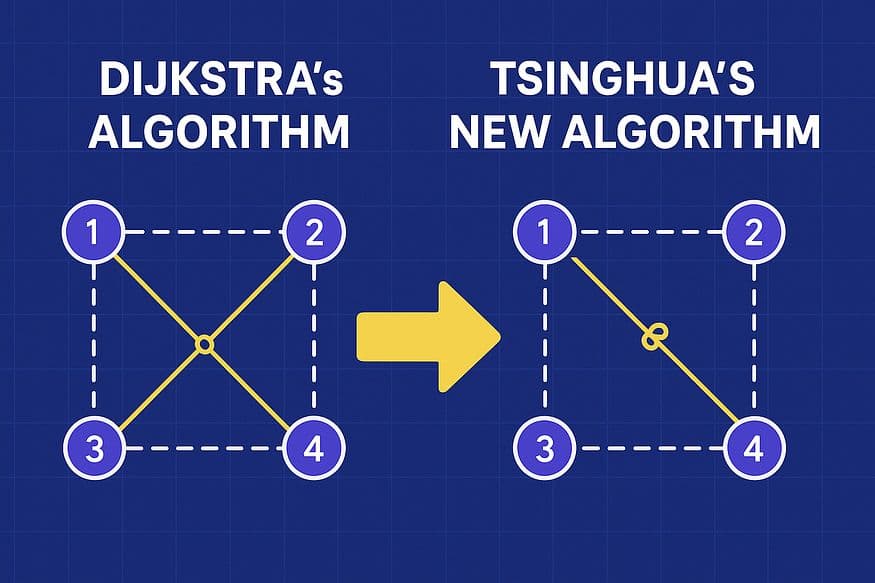
A major theoretical breakthrough in computer science. Researchers at Tsinghua University developed a new algorithm for the single-source shortest path (SSSP) problem that is asymptotically faster than the 65-year-old Dijkstra's algorithm for large graphs. The new method bypasses the traditional "sorting barrier" but is currently too complex to replace Dijkstra's in everyday applications. Its significance lies in opening new avenues for research in graph algorithms and challenging long-held assumptions.

February 14, 2026 by Kartik ShekharRead post
Image for AI in Cybersecurity: A Boon and a Bane
Cybersecurity

AI in Cybersecurity: A Boon and a Bane

The dual role of artificial intelligence in the modern digital security landscape. It explains how AI is weaponized by hackers for faster, more sophisticated attacks (like personalized phishing and deepfake scams), while simultaneously being leveraged by defenders for real-time threat detection, automated response, and predictive security measures. The blog concludes that AI is a powerful tool whose effectiveness depends on responsible use, but cautions that human behaviour remains the weakest link in cybersecurity systems.

February 10, 2026 by Kartik ShekharRead post
Image for When the Brain Speaks in Sentences: AI and the Rise of Mind Captioning
Cognitive Science

When the Brain Speaks in Sentences: AI and the Rise of Mind Captioning

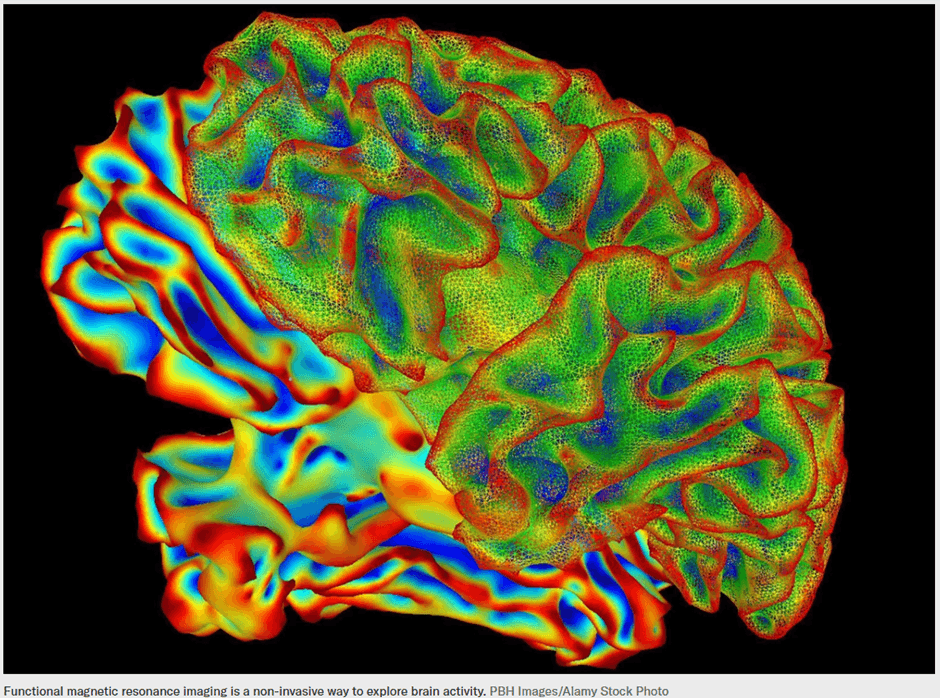
A new AI-driven technique called mind captioning. This approach converts patterns of brain activity, captured via fMRI scans, into detailed sentences describing what a person is seeing or imagining, even when recalling videos from memory. The article highlights that this breakthrough not only advances the understanding of how the brain forms meaning but also offers practical applications for communication in individuals with language impairments, while emphasizing the ethical need to safeguard mental privacy.

February 1, 2026 by Kartik ShekharRead post
Image for The 15% Rule: Why Most of Your LLM is Dead Weight
Sparse AI

The 15% Rule: Why Most of Your LLM is Dead Weight

Discusses the shift in Large Language Models (LLMs) from large parameter counts to efficiency, introducing the "15% Rule", the concept that only a small fraction of an LLM's weights are actively used. It details strategies for creating "Compact AI," such as SparseGPT for one-shot weight pruning and Reinforced Context Pruning to streamline the thought process. The piece concludes by advocating for elastic models that can dynamically adjust their size based on the task, while also cautioning about the Matthew Effect, which is the risk of losing specialized knowledge when models are reduced.

January 27, 2026 by Anvitha Bhat ARead post