
The Internet Cable That Feels the Ground Shake

The Setup: A Simple, Devastating Question
Somewhere under your street, a fiber-optic cable is carrying your internet traffic, laid there for exactly one purpose: bandwidth. It was never meant to sense anything about the physical world around it. But what if it already is — what if every tiny vibration in the ground is quietly disturbing the light passing through that cable, and nobody built the equipment to listen for it? What if the earthquake warning system you're counting on is missing seconds it doesn't have to miss, because the sensor that could catch those seconds was buried in the ground the whole time, doing something else?
The Breakthrough: Turning Bandwidth Into a Seismometer
Here's what USGS geophysicists actually built, working with California State Polytechnic University, Humboldt.
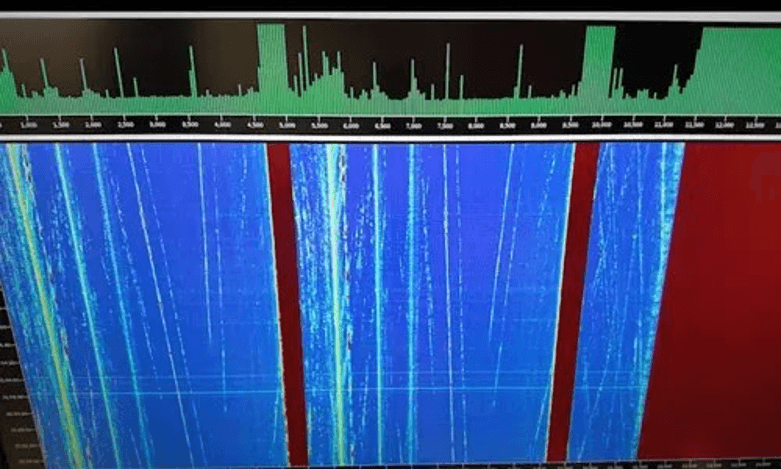
The US Geological Survey's endorsed public earthquake early warning system, ShakeAlert, relies on traditional seismometers and borehole strainmeters — purpose-built instruments installed at specific locations. USGS's Earthquake Science Center found a way to piggyback an entirely different kind of sensor onto infrastructure that already exists: ordinary fiber-optic internet cables. The technique, called distributed acoustic sensing, or DAS, works by pulling data from tiny interference patterns in the light traveling through the cable — essentially turning the whole cable into a long, distributed interferometer that responds to ground movement all along its length.
Lead author Theresa Sawi and her coauthors trained a machine-learning algorithm on years of borehole strainmeter data from past earthquakes, then applied those lessons to fiber-optic cables running between Arcata and Eureka in Humboldt County, California — an area just 30 miles north of where the Cascadia Subduction Zone terminates offshore, making it one of the most active earthquake hotspots in the continental US. The system reliably predicted magnitude 5.4-and-above earthquakes in roughly 79% of cases, compared to ShakeAlert's 80% precision — and did so with just the first few seconds of quake data, rather than waiting for a fuller seismic signal to develop.
Why It's Bigger Than It Looks
The obvious story is "new earthquake detector nearly matches the old one." The bigger story is what it took to build it: essentially nothing, in infrastructure terms. ShakeAlert exists because someone installed and maintains a dedicated network of seismometers and strainmeters. The DAS approach reaches comparable accuracy using fiber that telecom companies already buried for completely unrelated reasons. That changes the economics of earthquake monitoring entirely — instead of needing new hardware in the ground, you potentially need only new equipment at the ends of cable runs that already exist, in places that already have broadband.
That matters most in exactly the places that tend to be under-monitored: rural and coastal communities, where dedicated seismic instrumentation is expensive to install and maintain, but where fiber networks — servicing homes and businesses regardless of earthquake risk — increasingly reach anyway. A sensing method that rides on top of existing infrastructure scales differently than one that requires building new infrastructure from scratch.
The Part Nobody Talks About: It Doesn't Actually Win on Accuracy
It's worth being honest about the number: DAS caught roughly 79% of qualifying earthquakes, compared to ShakeAlert's 80% precision — essentially a tie, not an upgrade, on the accuracy dimension alone. The real gain isn't precision; it's speed and reach with the data the system already has. One of the hardest problems in earthquake early warning is determining how large a quake will become as quickly as possible, and Sawi's framing is specifically about answering that within seconds, not about beating existing systems outright. This is a complement to ShakeAlert, not obviously a replacement for it, and it's still connected to the exact same challenge every warning system faces — larger, more distant earthquakes generate weaker high-frequency signals that get harder to detect the farther they travel.
The Meta-Twist: The Real Payoff Isn't Even the Earthquakes
Connie Stewart, executive director of Cal Poly Humboldt's university initiatives, points to a twist that reframes the whole project: the incentive to build more broadband infrastructure in rural areas — usually justified purely by connectivity — now comes with an earthquake-detection bonus attached. Stewart also notes that submarine fiber cables, laid for entirely different economic reasons, could eventually help coastal communities prepare for tsunamis generated by undersea earthquakes. The project's most interesting implication isn't about better seismology at all — it's that investment decisions made for internet access might end up quietly funding disaster preparedness as a side effect, without anyone needing to justify the seismic use case on its own.
Conclusion: The Sensor Was Already There
This isn't really a story about a new earthquake detector — it's a story about noticing that one had already been built for something else. Fiber-optic cable was laid to move data, not to sense the ground shifting beneath it, and yet it turns out to be capable of both. As broadband keeps expanding into places that have never had dedicated seismic monitoring, the question worth asking isn't whether we can build better sensors. It's how much sensing capability is already buried under our feet, waiting for someone to point a laser down it and actually look.
References:
https://now.humboldt.edu/news/seconds-fiber-optic-cables-detect-earthquake-size
https://www.newswise.com/articles/in-seconds-fiber-optic-cables-detect-earthquake-size